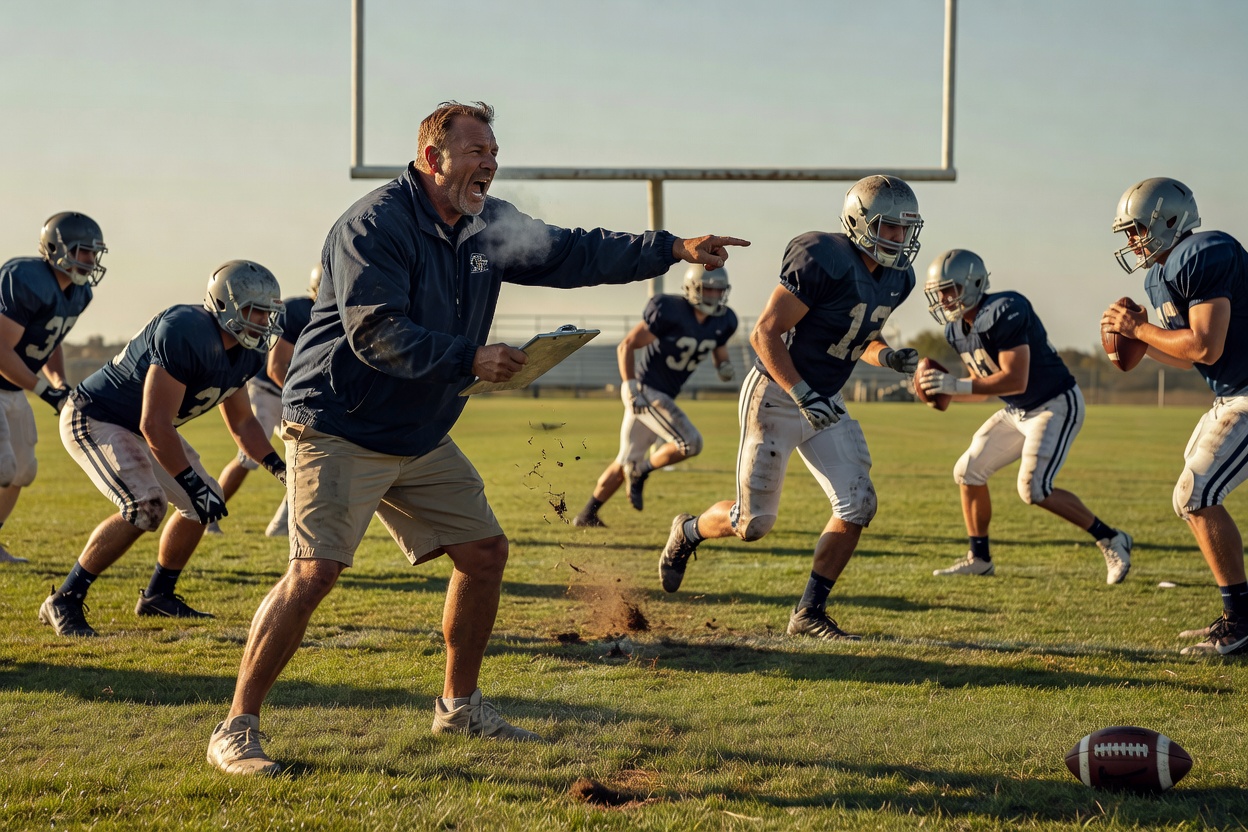
Coaching is the work of helping players notice, practise and apply football actions. A session can include demonstration, repetition, questions and games; the important choice is how those elements serve a clear learning purpose. There is no universal method that suits every age, ability or moment.
Build technique with a reason
Technical practice develops actions such as first touch, passing, receiving, dribbling, turning, finishing and defending. A first touch is the player’s initial contact with the ball; good control means preparing the next action, not simply stopping it. Passing and receiving can include body position, weight of pass, communication and awareness of space. Dribbling and turning give players ways to protect or move the ball, while finishing practice can explore timing, balance and different choices near goal.
Defensive positioning also involves more than tackling. Players learn to adjust distance, angle and body shape, protect useful space and coordinate with teammates. Coaching can make one detail clear, then let players test it in a changing situation. If every repetition has the same answer, a player may perform the movement without learning when it is useful.
Structured drills and game-based practice
A structured drill is a planned activity with clear repetition and relatively predictable conditions. It can help a coach introduce a movement, organise many attempts or focus attention on one detail. Its limitation is that a player may have little need to scan or choose. Game-based practice presents changing information and decisions. Small-sided games—games with fewer players and often a smaller area—can create frequent involvement and realistic problems, but they may be too complex if players do not understand the task or have little opportunity to practise the targeted action.
These approaches can work together. For example, introduce a receiving detail in a simple passing activity, then add a defender or direction choice, and finish with a small game where players decide when to use it. Repetition matters, but thoughtful repetition includes attention, feedback and some variation. The aim is not to remove mistakes; it is to make the challenge safe, understandable and useful.
Plan for decisions and feedback
Session planning begins with a specific objective: what should players notice or attempt? Keep the objective narrow enough to revisit. Demonstrations can make a movement visible, particularly when concise and followed by player practice. Questions can prompt players to scan their surroundings or explain a choice, but should not become a test with one hidden answer. Feedback is most useful when it is timely, respectful and connected to an action the player can try again.
Age, experience, confidence, group size, ability and access needs all influence design. Younger players may benefit from simple rules, varied movement and plentiful turns; older or more experienced groups may work with more tactical detail. These are planning considerations, not rigid age prescriptions. Adjust space, equipment, player numbers or constraints to make a task accessible without removing meaningful challenge.
Decision-making under pressure develops through practice that gives players information to read. A coach might ask a player to identify a defender’s position before receiving, or create a choice of target areas. Tactical awareness means recognising how teammates, opponents and space relate. It grows through discussion and experience as well as instruction. Players need match opportunities to test ideas, while coaches can connect observations back to training.
A practical session-planning checklist
- Objective: What is the one main learning intention?
- Equipment: Are balls, goals, bibs and markers ready and appropriate?
- Pitch layout: Is there enough safe space and a clear activity area?
- Player numbers: Will everyone get meaningful turns and involvement?
- Progression: How can the task become more or less challenging?
- Feedback: When will players pause, reflect or try again?
- Safety: Have hazards, weather and movement between areas been considered?
- Reflection: What did players attempt, and what should change next time?
Organising a purposeful practice
Before the session, check the playing space and adapt the plan to the group in front of you. Explain the activity briefly, show only the details players need to begin, then observe rather than filling every pause with instructions. If the activity is too easy, add a defender, a direction or a time-sensitive cue. If it is too difficult, simplify the area or reduce the number of choices. This responsive approach keeps players active while protecting the session’s intention.
Individual coaching can give focused attention to a player’s question or movement pattern. Group coaching adds peer interaction, competition and shared problem-solving. Neither is automatically superior. Coaches should consider the player’s needs and the opportunity for everyone to participate. Match review can extend learning when it stays specific and constructive: identify a moment, discuss available information and agree on a next experiment.
Coaches also need to organise safe sessions: use suitable equipment, explain boundaries, consider surface and weather conditions, and supervise transitions. If a player is uncomfortable or an activity raises a safety concern, pause and adapt. For medical questions, seek appropriately qualified advice rather than relying on a generic coaching guide.
Related field guides
See how coaching fits into academy structures, read about player development, and consider practice spaces in our training facilities guide.
Share a coaching question
Tell us which session-planning challenge you would like the journal to explore.
Contact the journal