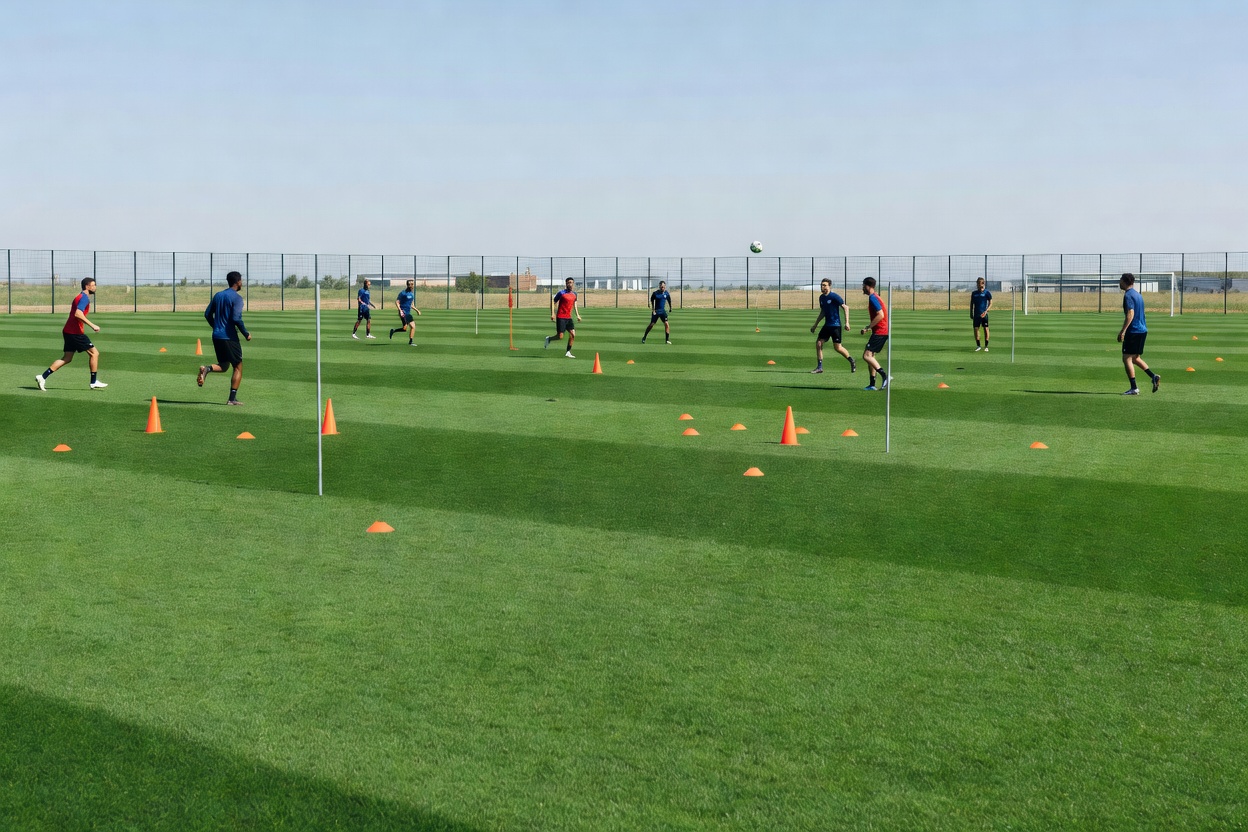
A training facility is not just a pitch. It is a collection of spaces, equipment, routines and people that help players practise safely and effectively. The right environment depends on the activity, local climate, access needs, usage, maintenance capacity and available resources. There is no single surface or building that is best in every situation.
Playing surfaces and training zones
Natural-grass pitches offer a familiar playing surface and can provide a strong match-like setting when they are well maintained and suitable for use. Their condition can vary with weather, drainage, ground care and intensity of use. Recovery time and maintenance planning matter, particularly when several groups share a space.
Artificial surfaces may support more consistent scheduling and frequent use, depending on the system and its upkeep. They can feel different from grass and may require appropriate footwear, maintenance and local guidance. Suitability depends on the surface design, climate, activity and user needs. Avoid assuming one surface is universally safer, faster or superior; ask how the facility manages its specific playing conditions.
Small-sided zones can make it easier to organise short games, technical work or station-based activities. Indoor areas can keep sessions moving in poor weather and support movement or ball work, though space, ceiling height, ventilation and layout affect which activities are appropriate. Coaches should adapt tasks to the area rather than simply transfer a full-pitch exercise into a smaller room.
More than the playing area
Gym and strength-training spaces may support age-appropriate movement education when supervised by suitably qualified people. The equipment and programme should match participants’ needs; this guide does not prescribe training loads. Recovery spaces can offer a calm place to pause or follow appropriate professional guidance, but they are not a substitute for qualified medical care.
Changing rooms, toilets, hygiene facilities and accessible routes influence whether players can use a site comfortably. Equipment stores help keep balls, cones, mannequins, goals and bibs organised. Storage should be secure and arrangements should avoid cluttering walkways. Video-analysis and meeting rooms can support tactical conversations; education spaces may allow players to work away from the pitch. These rooms are most useful when their purpose, supervision and availability are clear.
Lighting, drainage and safe movement
Lighting and drainage affect when and how spaces can be used. Their suitability depends on local conditions and specialist assessment; there are no one-size-fits-all specifications. Maintenance routines should consider wear, weather and the number of users. Ask who checks the playing surface, what happens when conditions are unsuitable and how players are informed about changes.
Safe facility planning includes movement between areas. Players may walk from changing spaces to a pitch, indoor hall or classroom, sometimes carrying equipment. Clear routes, sensible supervision and well-organised transitions can reduce confusion. Coaches should identify hazards, boundaries and emergency arrangements before sessions begin, while following the facility’s current procedures.
Accessibility is more than a step-free entrance. Consider routes, toilets, changing arrangements, parking or drop-off, communication and whether activities can be adapted. Invite players and families to explain what helps them participate. Inclusive planning should be discussed with relevant professionals and the facility operator rather than assumed from a photograph or brochure.
Facility assessment checklist
- Is the pitch condition suitable for the planned activity?
- Does the surface suit the group, footwear guidance and weather?
- Are drainage, lighting and maintenance arrangements clear?
- Are goals, balls and other equipment intact and stored safely?
- Are changing, toilet and hygiene facilities usable and accessible?
- Is there a clear first-aid response and emergency communication plan?
- Are players supervised during transitions between spaces?
- Can equipment and activity areas be organised without blocking routes?
Planning around resources
Facility decisions involve practical trade-offs. A well-kept outdoor pitch may support realistic team practice but be unavailable during severe weather. An indoor area can offer predictable cover but may limit certain movements or long passing. A gym can create room for supervised movement education, while equipment storage and maintenance take time. Good planning starts with the purpose: what does the session need, who will use the space, and what conditions make it suitable?
Scheduling also matters. Shared sites need clear booking, setup and handover routines. A tight timetable can make it difficult to prepare equipment or move a group safely. Consider age-appropriate goals and ball sizes, accessible equipment, enough space for the number of players and a backup plan when conditions change. Budget and staffing affect what can be maintained over time, so ongoing care deserves as much attention as new construction.
Visit with useful questions
When researching a site, ask what areas are available to the group, how they are maintained and who is responsible for supervision. Find out how the facility handles unsuitable weather, equipment concerns and access requests. Do not infer public access, opening times or tour availability from an online image. Confirm current details directly with the operator.
Real facilities differ in purpose and availability. This guide does not imply inspection, access, endorsement or affiliation with any named venue. For any site, current arrangements and safety procedures must come from its operator.
Related field guides
Read about coaching methods, consider academy environments, or explore education and wellbeing.
What makes a training space work?
Send us a question about facilities, access or practical session planning.
Contact the journal